Learn how workflow management and time tracking optimize productivity, streamline processes, and ensure projects are completed efficiently and on time
Have you ever struggled to optimize your workflows and ensure your team is performing at its best?
If so, you’re not alone!
Managing projects can often feel like juggling multiple tasks without a clear view of where each one stands. Team members are working on various stages of projects, but without real-time insights, it's tough to know where time is being lost or where the bottlenecks are.
The key to improving workflow efficiency lies in workflow management. But how can you ensure that your workflows are performing optimally? The answer is simple: by integrating time tracking into your workflow management system.
In this blog, we’ll dive into what workflow management is, why it matters, and how time tracking tools like RVS Time in Status can take your workflow management to the next level.
What Is Workflow Management?
Workflow management is the blueprint for transforming how your team works. It’s not just about managing tasks; it’s about designing workflows that drive efficiency, performance, and results.
By eliminating bottlenecks and streamlining task transitions, you ensure that every project moves forward with clarity and precision. For project managers, this means having complete control over project timelines, resources, and outcomes, empowering your team to meet deadlines and exceed expectations without unnecessary delays.
To take your workflow efficiency to the next level, RVS Softek offers a suite of powerful tools for planning, reporting, and optimizing workflows within Jira, ensuring seamless project management.
Key Stages of the Workflow Management Process
Planning and Mapping Tasks
Execution and Monitoring
Optimization and Continuous Improvement
At its core, the workflow management process consists of three key stages. Here’s how each stage works:
1. Planning and Mapping Tasks:
As a project manager, planning can often feel like the most overwhelming phase. You need to map out each task, assign roles, set deadlines, and determine the right tools — all while ensuring your team is aligned. Unclear task ownership or lack of clarity can lead to delays and confusion right from the start.
To solve this, take the time to define each step of the workflow clearly. This includes:
Assign Roles and Responsibilities
Set Realistic Deadlines
Identify Task Dependencies
Choose the Right Tools and Resources
Establish Communication Channels
2. Execution and Monitoring:
Once the plan is in place, the team executes tasks and tracks progress through various stages of the workflow, including task execution, quality checks, approvals, and final delivery. Each stage ensures that tasks meet deadlines, quality standards are upheld, and any issues are addressed promptly for smooth project completion.
3. Optimization and Continuous Improvement:
Once tasks are completed, the final step involves reviewing how the workflow performed and identifying areas for improvement.
Were there delays?
Were resources utilized effectively?
By evaluating these aspects, teams can optimize workflows, automate processes, and streamline tasks for future projects.
How Time Tracking Helps Improve Workflow Management?
Time tracking was never just about knowing how many hours your team spent on each task or sprint, but it also allows you to dig deep and understand where you need to improve in your workflow by providing other valuable insights.
By integrating time tracking into your workflow management system, you gain the ability to:
Gain Visibility Into Each Task: Beyond tracking the time of a particular task, Time tracking gives you real-time insights into whether it’s moving through the stages of your workflow or getting stuck in one place. With time tracking, you can know where your processes are slowing down.
Identify Bottlenecks: Time tracking allows you to spot inefficiencies quickly. For example, suppose a task spends too much time in a particular workflow stage (e.g., "in progress" or "waiting for approval"). In that case, you can address it before it negatively impacts project timelines.
Enhance Resource Allocation: By tracking the time spent on tasks, you can redistribute resources more effectively. For instance, if one team member is spending an inordinate amount of time on a particular task, it might make sense to reassign some of their workload.
Improve Accountability: When team members know their time is being tracked, they are more likely to stay on task and meet deadlines. It also helps managers keep track of how much time each team member spends on various tasks, ensuring proper workload distribution.
To fully harness the benefits of time tracking and elevate your workflow efficiency, you need a tool that delivers real-time insights and seamless integration. RVS Time in Status is the perfect solution, offering powerful features that streamline your processes and keep your projects on track.
For more on how it can transform your workflow, explore the use cases here.
Key Features of Time Tracking Software for Workflow Management
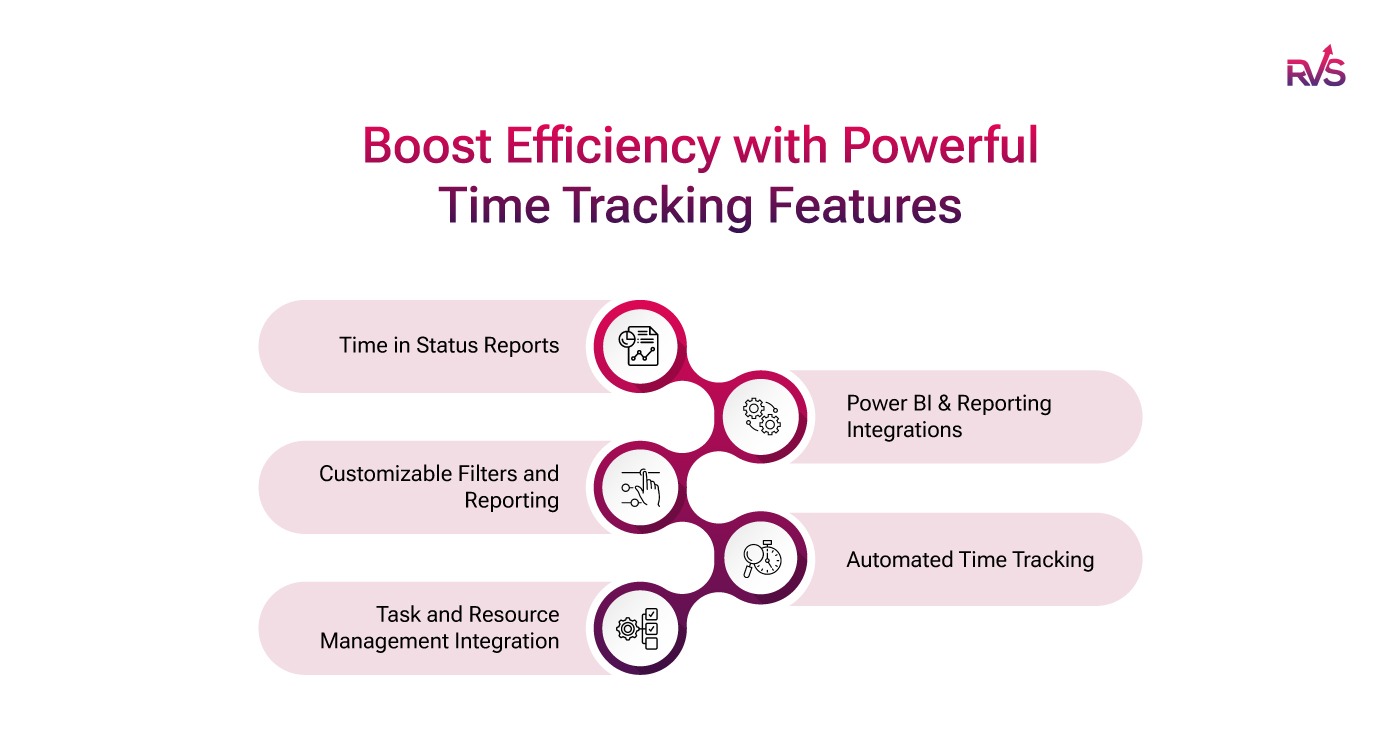
Time tracking software offers essential features that directly enhance workflow management. These tools provide visibility into task durations, identify bottlenecks, and help teams optimize their workflows for greater efficiency.
Here are the key features that make time tracking software a vital tool for managing workflows:
1. Time in Status Reports:
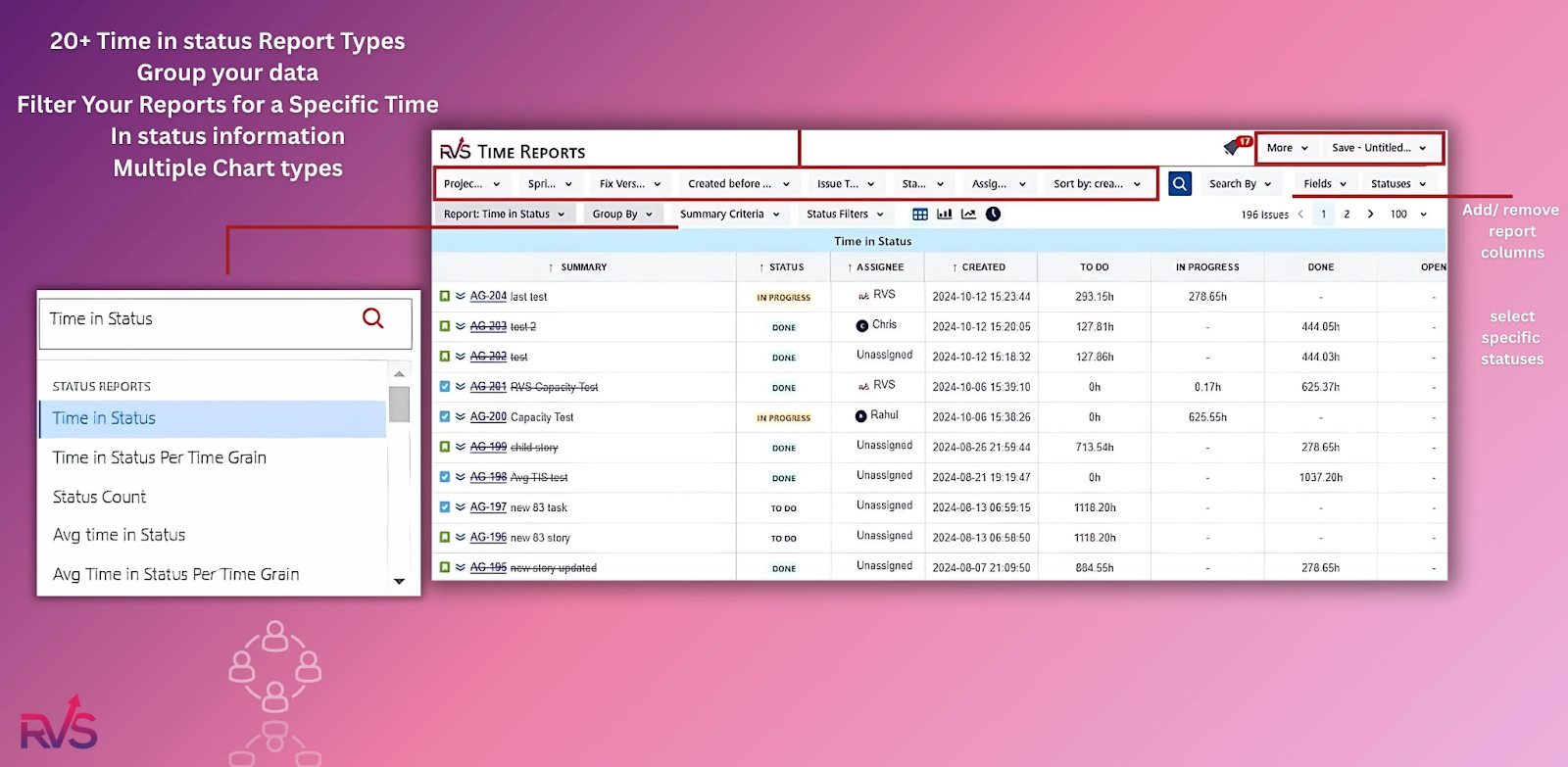
One of the core features of time tracking software is the ability to generate time-in-status reports. These reports provide detailed insights into how long tasks take in each stage of the workflow. By tracking the time taken for each task to move through different workflow stages, teams can identify bottlenecks or inefficiencies and take action to improve the process.
For example, if tasks are taking too long in the "In Progress" stage or there are frequent delays during the "Approval" phase, these insights allow project managers to make informed decisions to reduce delays and optimize task flow.
2. Power BI & Reporting Integrations:
Many time tracking tools offer integrations with business intelligence (BI) tools, such as Power BI, to help teams visualize time data in a more meaningful way. Such integrations allow users to create interactive dashboards that provide at-a-glance views of task durations, team performance, and project progress.
By having access to advanced data visualizations, managers can track workflows in real time, make quick adjustments, and have a clearer view of the overall project health. This leads to faster decision-making and more proactive management.
3. Customizable Filters and Reporting:
Customizable filters allow users to tailor reports based on specific criteria, such as assignee, project, task type, or sprint. This flexibility enables managers to generate reports that align with their team’s unique needs and workflows.
For example, you might want to see how much time specific team members are spending on certain tasks, or track time spent on high-priority projects. Custom filters provide more granular insights, making it easier to analyze performance across various dimensions of your workflow.
Additionally, time tracking software often allows you to export data into formats like CSV, Excel, or Google Sheets, which enables teams to share and analyze time data across different platforms. This enhances collaboration and helps managers communicate insights to the entire team.
4. Automated Time Tracking:
Modern time tracking software often includes automatic time tracking features that simplify the process for users. With automatic time tracking, the software can detect when team members start and stop working on tasks, eliminating the need for manual time entry.
This feature reduces human error and ensures more accurate data. It also helps team members focus on their tasks without worrying about logging every minute, allowing them to stay productive and fully immersed in their work. For workflow management, this automatic tracking ensures that you have a more accurate picture of how time is spent throughout the process.
5. Task and Resource Management Integration:
Another essential feature of time tracking software is its ability to integrate with task management and resource management tools. This integration helps provide a unified view of how time and resources are being allocated to different stages of the workflow.
6. Billing and Invoicing:
For service-based businesses or teams that bill clients based on hours worked, time tracking software often includes billing and invoicing features. These features help automate the process of generating invoices based on tracked hours, making it easier to bill clients accurately and on time.
For example, if you’re working on a project with multiple phases, time tracking software can calculate the total time spent on each phase and automatically generate an invoice based on preset rates. This reduces administrative overhead and ensures timely billing.
RVS Time in Status: The Ultimate Tool for Optimizing Workflow Efficiency
When it comes to workflow management, RVS Time in Status is a true game-changing Jira time tracking software. Unlike traditional time tracking tools, RVS Time in Status integrates seamlessly with Jira, giving your team real-time insights into how time is spent across each task and stage within a project. This integration not only streamlines your workflow but also provides powerful data that can drive project efficiency and team productivity.
With detailed time-in-status reports, you’ll gain a 360-degree view of your project’s performance, enabling you to identify bottlenecks, optimize resource allocation, and adjust timelines proactively.
The customizable filters allow you to tailor the reports to your specific needs, whether you're tracking individual tasks, specific sprints, or overall project timelines. This level of detail ensures that you have all the data you need to make informed decisions that keep projects on track and under budget.
Key features of RVS Softek Time in Status include:
Detailed Time-in-Status Reports: Track how much time tasks spend in each workflow stage, identify delays, and optimize task transitions.
Customizable Filters: Tailor your reports by project, assignee, sprint, or other parameters, giving you the flexibility to analyze performance from any angle.
Real-Time Analytics: Monitor team performance and workflow progress as it happens, allowing for immediate action if delays or inefficiencies arise.
Seamless Jira Integration: Easily integrates with Jira, so there’s no need to switch between platforms, making time tracking an effortless part of your workflow.
Data Export Options: Export time data to CSV, Excel, or Google Sheets for sharing, analysis, or reporting.
Conclusion
Incorporating time tracking into your workflow management strategy is not just a nice-to-have; it’s a must for any team looking to improve efficiency, reduce delays, and enhance productivity.
With tools like RVS Time in Status, you can gain real-time insights, optimize processes, and ensure that tasks are completed on time. Time tracking doesn’t just help you keep track of hours — it enables you to improve the entire workflow.
Start using RVS Time in Status today and take the first step toward improving your team’s workflow management. Track, optimize, and deliver better projects faster.
Ready to optimize your workflow? Schedule your RVS demo today.
Frequently asked questions
1. How does RVS Time in Status help improve workflow management?
RVS Time in Status seamlessly integrates with Jira, providing detailed time-in-status reports and real-time analytics. This enables project managers to track time spent on each task and stage, identify bottlenecks, and optimize workflows for greater efficiency.
2. Can RVS Time in Status be integrated with my existing project management tools?
Yes, RVS Time in Status integrates effortlessly with Jira and other popular project management tools, ensuring seamless time tracking within your existing workflows. This integration provides a unified view of your project data, streamlining tracking and reporting.
3. What are the key benefits of using RVS Time in Status for time tracking?
RVS Time in Status offers detailed insights into time spent at each workflow stage, helping project managers pinpoint inefficiencies, improve task prioritization, and boost team accountability. The software also allows for customizable reports and real-time progress monitoring.
4. How does time tracking software like RVS Time in Status identify workflow bottlenecks?
Time tracking tools like RVS Time in Status track how long tasks spend in each workflow stage. By analyzing this data, project managers can quickly identify stages where delays occur, making it easier to optimize task transitions and improve overall workflow efficiency.
5. Can RVS Time in Status help manage remote teams and multiple projects?
Absolutely! RVS Time in Status provides real-time time tracking and reports that keep remote teams aligned and accountable. Whether managing multiple projects or distributed teams, RVS ensures visibility into every task, helping project managers keep projects on track regardless of location.
6. How do customizable filters in RVS Time in Status improve workflow management?
Customizable filters allow you to tailor time tracking reports based on project, assignee, sprint, or task type. This flexibility gives project managers the ability to focus on specific areas of a project, enabling more precise analysis and decision-making.
7. How does integrating time tracking data into Power BI help with workflow optimization?
By exporting time tracking data from RVS Time in Status to Power BI, project managers can create advanced visualizations and dashboards. This makes it easier to analyze team performance, identify trends, and make data-driven decisions to continuously optimize workflows and project delivery.
Recent Blogs
July 23, 2026
Jira Time in Status Report: Complete Guide for Project Managers




.webp)





